- MEN
- WOMEN
- KIDS
- STREETWEAR CLUB
- DESIGNERS
- SALE
NEW
CLOTHING
SHOES
BAGS
ACCESSORIES
JEWELLERY
DESIGNERS
EDITORIAL
TRAVEL IN STYLE
Bring effortless, off-duty vibe into your travels
FOCUS ON MINIMALISM
Discover brands that have mastered the art of simplicity
SUMMER ESSENTIALS
On the beach or in a fancy resort? Know what to pack in your summer travel bag
FOCUS ON SHOES
Explore the most stylish designs for spring/summer 2026
SS26 TREND REPORT
Soft silhouettes and bold details – menswear trends

SPORT IS A NEW LUXURY
Clothing designed for action – from training to the urban rhythm of the day

NEW

CLOTHING
SHOES
BAGS
ACCESSORIES
JEWELLERY
DESIGNERS
EDITORIAL
AW26 TREND REPORT
Get ready for fall and discover the season's key trends
BACK TO OFFICE
Discover a modern approach to office dress code
MOST WANTED
Discover accessories that will highlight your style
MORE OR LESS
Bold extravagance or purist at heart? Which side are you on?
FASHION IN MOTION
Discover how performance and design converge in a modern wardrobe

NEW
BABY (0-36 MONTHS)
KIDS SHOES (25-39)
KIDS ACCESSORIES

GIRLS CLOTHES (4-14 YEARS)
BOYS CLOTHES (4-14 YEARS)
DESIGNERS

SALE
MEN
WOMEN
KIDS
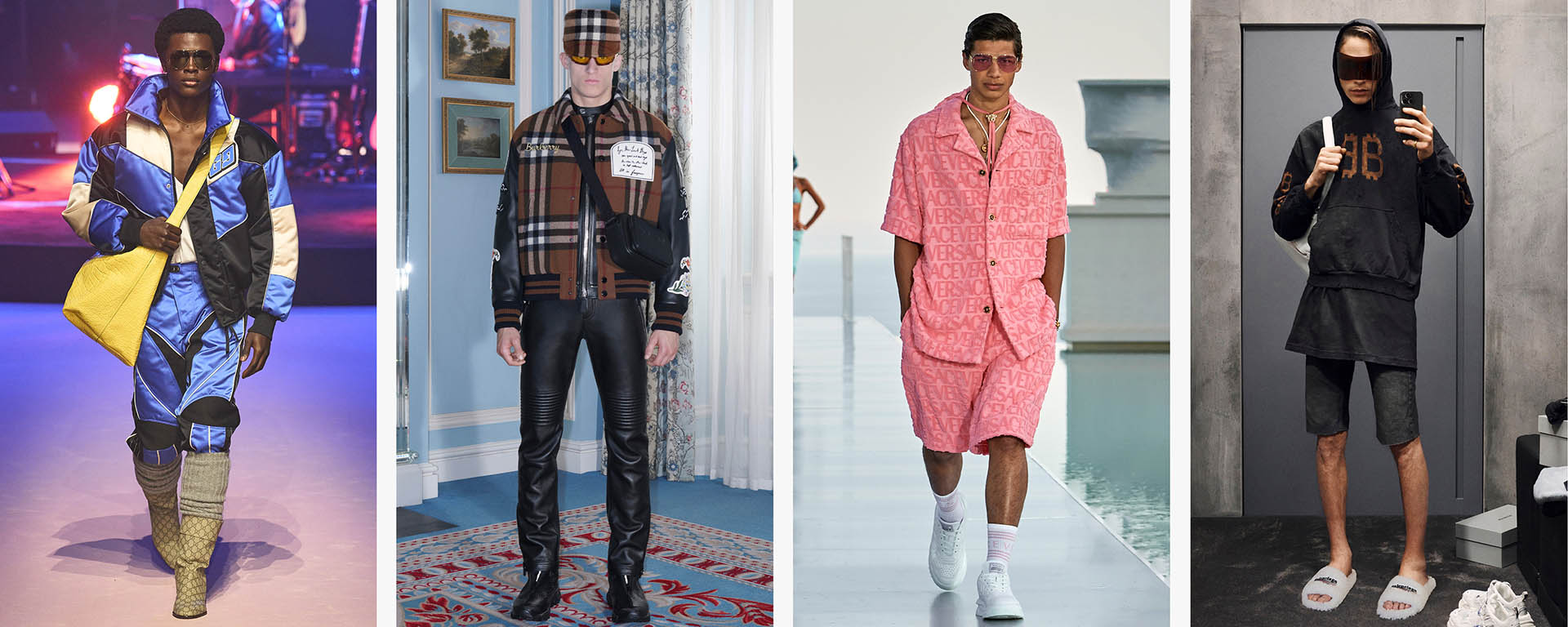
LET'S TALK ABOUT THE LOGO
What makes up the success of the most renowned fashion houses? What is it that stirs excitement at the mere mention of their name, instantly evoking luxury
and a range of unique associations? What gives them their extraordinary character and sets them apart from the crowd? Graphic designer Milton Glaser once said that
“a logo is the entry point to a brand.” Whether it’s composed of letters, symbols, or a fusion of both—by itself, the logo already conveys
a complete message. Since ancient times, hallmarks and seals were used to represent quality; from the Industrial Revolution onward, they guaranteed authenticity and a consistent standard for every model coming off the production line—eventually
evolving into an autonomous marketing tool, selling a specific lifestyle. What does a logo mean today? Is wearing it considered “in good taste”? The answer is not straightforward. Fashion is undeniably fluid and cyclical. Trends can immediately inspire
admiration, or cause trendsetters to grimace in distaste—but never permanently. They often depend on context and, though it may not sound fair, also on who is wearing them. Discover whether logomania is the trend for you.
BURBERRY:
DISCREET VISIBILITY
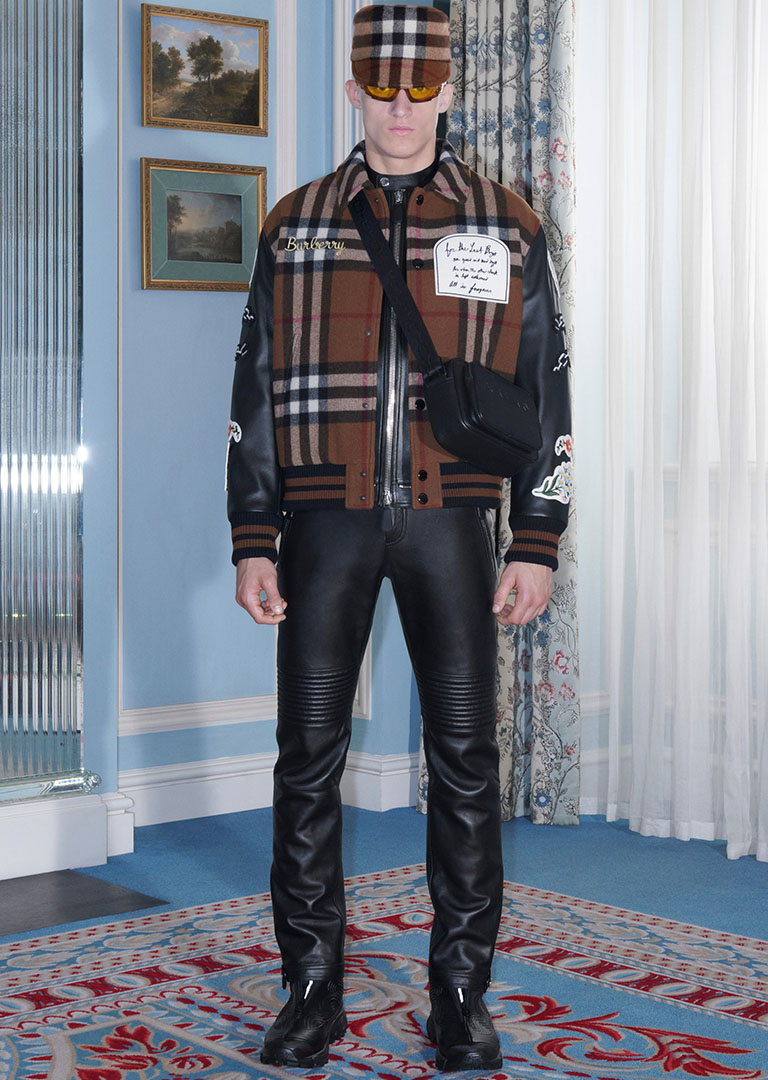
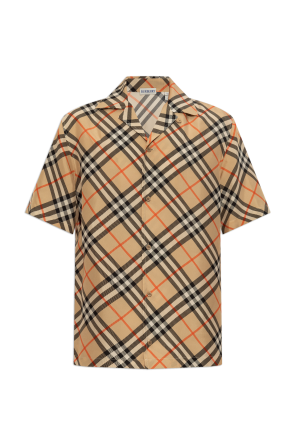
The iconic check adorning the inner lining of Burberry trench coats first appeared in the 1920s, but for a long time its existence was known only to a select few. The Scottish tartan with a beige background became the talk of the town after a photograph of Olympic athletes in 1964. The sunny weather took the sportswomen, who were being photographed at the airport, by surprise—putting the checkered lining of the coat, hastily thrown over one of their shoulders, front and center. Soon after, patterned umbrellas and cashmere scarves hit the shops. This distinctive pattern became a symbol of social status and prestige, fitting perfectly into the "Sloane Ranger" style that reigned in London in the late 1970s and early 1980s. Its main advantage was its "discreet visibility." More affordable accessories proved to be a sales hit, but their widespread availability also had a dark side.
Popular scarves gave so-called football hooligans a way to hide their faces and blend into the crowd, while caps adorned with the print soon became the trademark of the so-called "chavs," an aggressive British youth subculture originating from the working class. A brand image crisis ensued, causing many pubs in the 1990s to ban the once-elite pattern. Originally designed with exactly the opposite intentions, the Burberry check remains today one of the most frequently counterfeited designs. Despite obstacles, highs and lows, Burberry—like the knight in its logo—continues to move forward. Today, without forgetting its heritage and tradition, the brand reaches out with an inclusive offering for diverse groups, designing streetwear pieces with the same passion as its iconic trench coats—both adorned with the famous check.
BALENCIAGA AND VETEMENTS:
A FRESH PERSPECTIVE
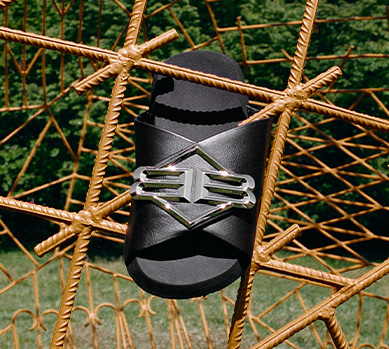
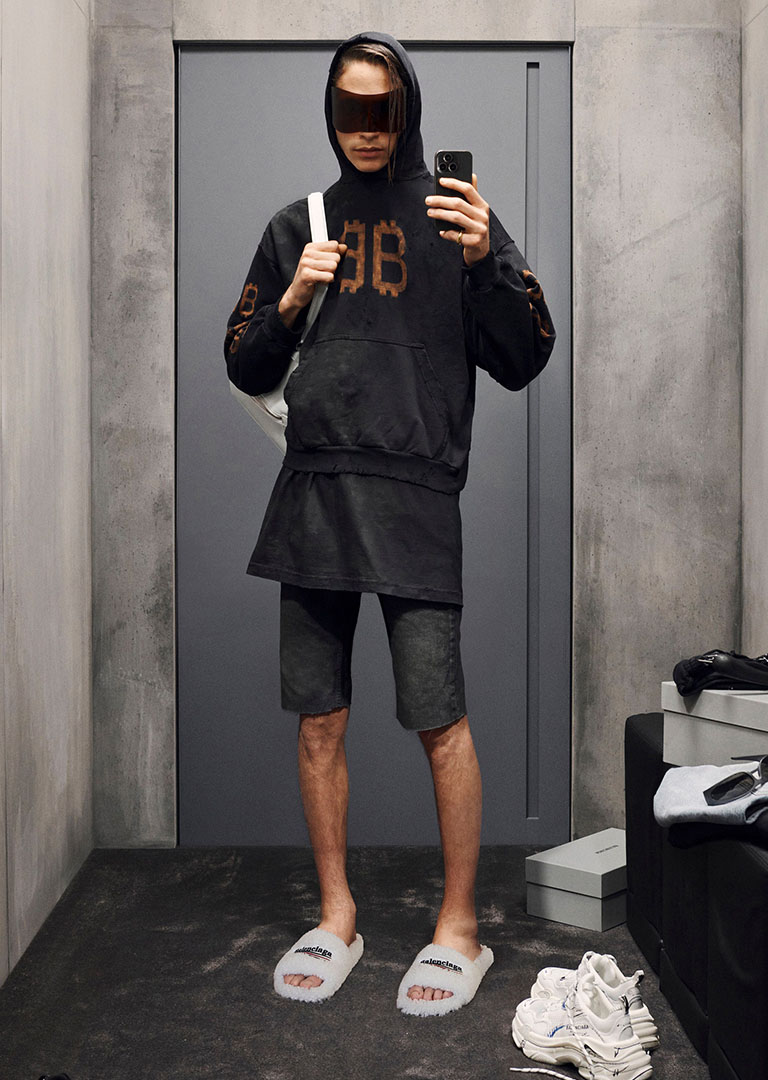
With each new wave of changing trends, the way brands present their house codes continues to evolve. In recent seasons, monograms have dominated the runways, often unabashedly covering entire products or even creating total looks—from clothing to accessories. Even fashion house logos are subject to trends. Sans-serif fonts first appeared as early as 1816 due to their clarity and legibility, even at extremely large or extremely small sizes, giving them an advantage in commercial printing and advertisements. Today, designers are once again appreciating their simplicity and adaptability, whether for the size of a billboard or a phone screen, as well as the endless possibilities for modification and added elements. Demna Gvasalia, the current creative director of the Balenciaga fashion house, has harnessed the latent potential of the logo.
He brought high fashion from the red carpets to the streets, turning casual projects like a basic logo t-shirt into a true object of desire. What happens when something completely ordinary—or even “unfashionable”—is elevated to the rank of luxury? In 2016, the brand Vetements, founded by him and his brother, drew attention with a logo... DHL. The designer admitted that the shipping and logistics company is omnipresent in his life, as well as being an important part of what makes a fashion brand function. A logo catches the eye, evokes emotion, fosters relationships, and can become something people form an attachment to.

VERSACE:
A FUSION OF TRADITION
AND MODERNITY
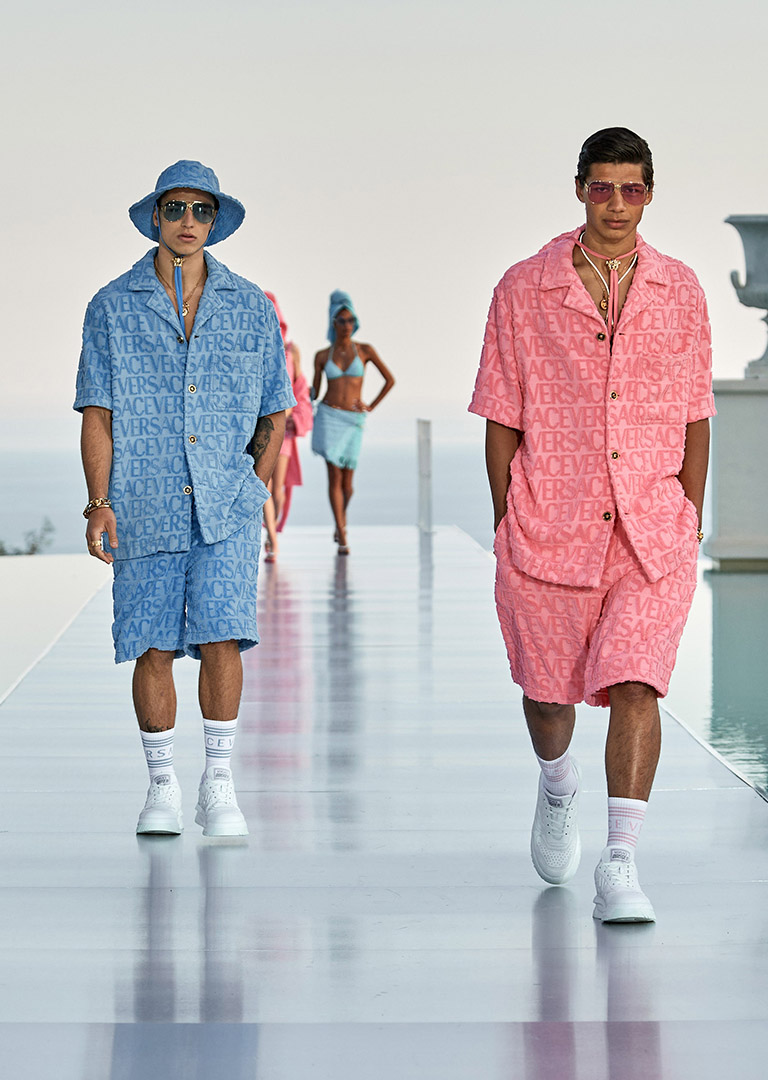
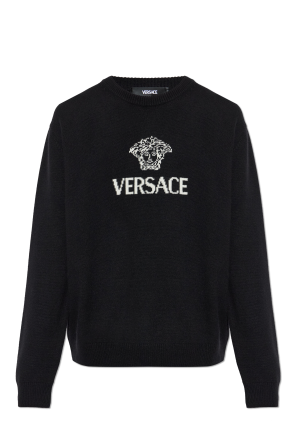
Can wearing logos and other house codes be considered vain? Gianni Versace loved to provoke, and while other brands succumbed to the trend of minimalism, he always stayed true to himself and his distinctive aesthetic. When designing his brand's logo, he made the rather audacious decision to feature the head of the mythological Medusa, a symbol meant to serve as a warning against dangerous desire and vanity. In one interview, Donatella Versace recalled how she asked her brother about this choice, and he replied, “Anyone who falls in love with Medusa can never escape from her.” It is, in fact, impossible to pass by the Italian fashion house’s collections indifferently—they stand out thanks to their perfect tailoring and opulent infusion of vibrant colors and striking patterns.
Without a doubt, these collections are designed for individuals with exceptional self-confidence, those who love to stand out and are not concerned with the opinions of others. Baroque prints have been a recurring motif in Versace collections since the spring/summer 1992 show, allowing the brand to seamlessly blend tradition with modernity. For decades, Versace has remained faithful to its signature motifs, reinterpreting them through the lens of current trends, which has earned the brand an equally loyal clientele. At the same time, Versace continues to attract new, younger generations, and among its admirers are esteemed artists and celebrities from all over the world.


GUCCI:
EXCLUSIVE OR INCLUSIVE?
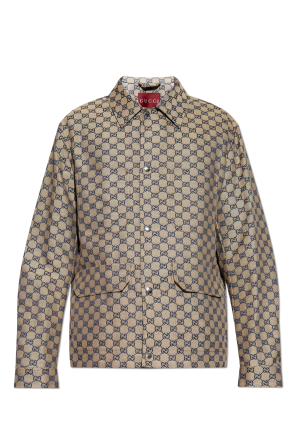
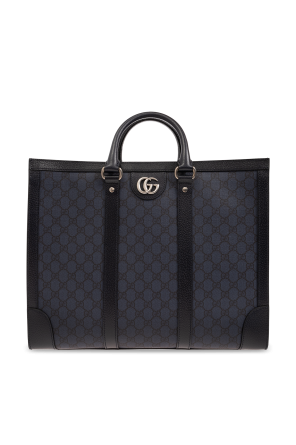
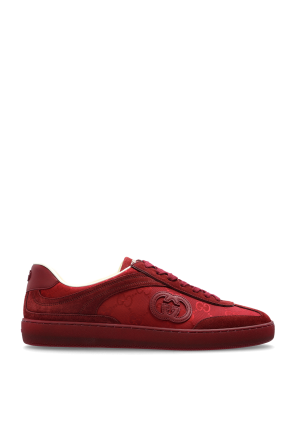
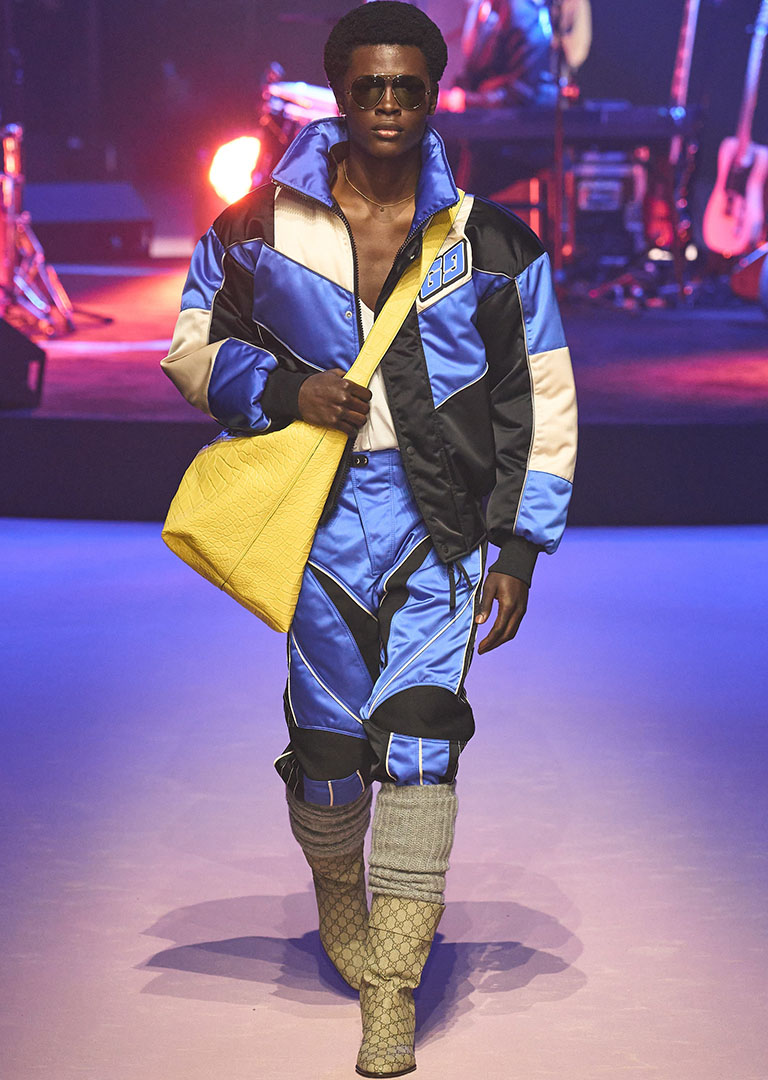
It is impossible to discuss logos without mentioning the name that forever changed the history of American (and global) fashion. Dapper Dan was born in Harlem—a neighborhood full of contrasts in New York City, inhabited mainly by African Americans. In 1982, inspired by his travels, he decided to combine his cleverness with his passion for tailoring and opened a 24-hour boutique offering custom-made "Africanized European fashion." To achieve this, he would rework products with monograms well-known to fashion fans into unique designs, beloved by Black artists, particularly up-and-coming hip-hop stars. Over time, he began to recreate designs with iconic fashion house logos himself, which led to further legal troubles and forced him to close his business in 1992. The designer, known as a specialist in "bootlegging," who had become somewhat forgotten, was back in the spotlight when, during the Gucci Cruise 2018 show, one of the models wore a fur jacket strikingly similar to the one Dapper Dan designed for Diane Dixon in the late '80s. This obvious inspiration created a storm on the internet, resulting in a joint capsule collection, and the bold designs even made it onto the Met Gala red carpet. It was not the first opportunity to show that, despite its over 100-year tradition, Gucci moves with the times and can treat its own house codes with a sense of distance.
In 2016, the brand collaborated with an artist who used the famous monogram in his art. Known as GucciGhost, he first cut out the iconic G in a bedsheet to make a Halloween costume, which earned him popularity on Instagram. As he himself said, he would keep using the pattern until the Italian fashion house either sued him or hired him—and he got his wish. The result included, among other things, viral bags with the word "REAL" spray-painted over the original Gucci logo. Today, no one is surprised by further reinterpretations of the logos of world-famous brands, created by street artists or even referencing... cartoon characters.